
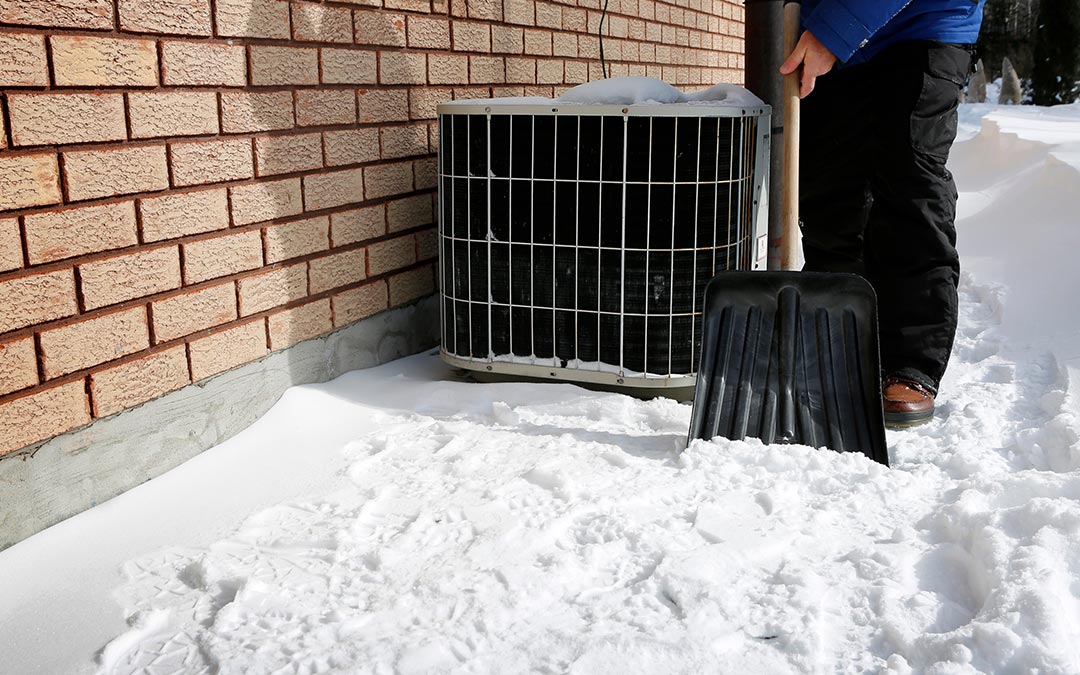
Central Oregon winters can be tough on your home’s heating system. Heavy snow, ice buildup, and freezing temperatures not only put extra strain on your equipment but can also create serious safety hazards if you’re not prepared. Taking a few proactive steps now can help you protect your system, prevent damage, and keep your home warm and safe through the coldest months. Here’s what every homeowner should know about heating safety during snow and ice season.
Keep Outdoor Units Clear of Snow and Ice
If you have a heat pump, the outdoor unit is critical to your home’s heating performance. When snow or ice builds up around it, the system can’t draw in enough air to operate efficiently. Restricted airflow can cause your unit to work inefficiently, freeze up, or shut down. Helpful tip: if you see water (or even frozen water) collecting beneath the outdoor unit, that’s actually a good sign that your heat pump is defrosting correctly.
After every snowfall, check your outdoor heat pump and gently clear away snow and ice from the top and sides. Use a soft broom or brush instead of sharp tools to avoid damaging the fins or coils. Make sure there’s at least 2 to 3 feet of clearance (or according to manufacturer guidelines) around the unit to allow for proper airflow. If the system becomes covered in thick ice, turn it off and call a professional for safe removal rather than trying to chip it away yourself.
For homes with ground-level furnaces or boilers that vent outside, snow drifts can also block the vent openings. A blocked vent can prevent exhaust gases from escaping and cause dangerous carbon monoxide buildup inside your home. Make it part of your winter routine to check these areas regularly after storms.
Inspect and Protect Vents and Exhaust Pipes
All heating systems need proper ventilation to operate safely. Snow and ice can easily block intake or exhaust pipes on the side of your home, especially during a blizzard or high wind event.
Walk around your home after a storm and look for vents near the foundation, basement windows, or roofline. Keep these clear of snow, leaves, and ice dams. You should also check that the vent covers are intact. Missing or cracked covers can allow snow or pests to enter, leading to blockages.
If you notice frost or condensation around your exhaust pipes indoors, that’s a sign of poor airflow. Contact our team to inspect your system and make sure everything is venting properly.
Maintain a Safe Fuel Supply
For homes that rely on propane or natural gas, make sure your fuel supply is ready before major snowstorms hit. Schedule refills early in the season and check that fuel lines and regulators are protected from snow and ice buildup. If your system uses oil, keep the tank area clear and accessible for deliveries.
Always store flammable materials like propane tanks or gasoline away from your furnace or heating system. Keeping the area around your heating equipment clear is one of the simplest yet most effective heating safety precautions you can take.
Prepare for Power Outages
Heavy snow and ice can sometimes bring down power lines, leaving your home without electricity for hours or even days. We recommend making a plan for how you’ll stay warm and safe if the power goes out:
- Have backup heat options: Portable generators or space heaters rated for indoor use can help, but make sure they’re properly ventilated and used according to manufacturer instructions. Never use an outdoor generator inside your home or garage.
- Protect your pipes: If the temperature drops and your heating system isn’t running, open cabinet doors to allow warm air to reach pipes and prevent freezing.
- Install battery-powered carbon monoxide detectors: These should be placed on every level of your home to alert you to dangerous gas buildup during outages or equipment malfunctions.
Schedule Routine Maintenance
The best way to ensure heating safety is through regular system maintenance. Professional inspections help identify small issues before they become emergencies and ensure your system is running efficiently in winter conditions. Technicians will check electrical connections, clean components, and confirm that safety controls are working as intended.
At Bend Heating, we’ve been helping Central Oregon homeowners stay comfortable and safe since 1953. Our certified technicians know how local weather affects your system and can help you handle everything from overnight freezes to week-long cold snaps.
Heating Safety Made Easy
By following these winter heating safety tips, you can protect your system, reduce the risk of fire or carbon monoxide exposure, and keep your home warm and reliable all season long. If you’d like help preparing your system for winter weather or need a safety inspection, contact Bend Heating today. Our experts are here to ensure your heating system stays reliable through every winter storm.
 CALL US
  TEXT US