
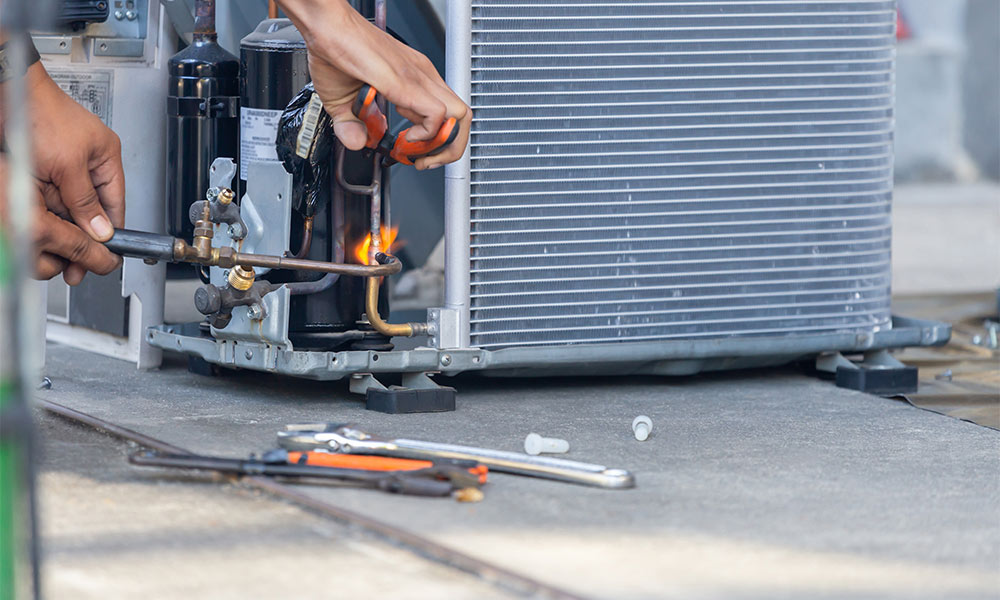
After an unseasonably warm winter, Bend homeowners are already thinking about cooling season. Here’s why scheduling AC repair services now—before temperatures climb—saves you money, stress, and sweat.
If you’ve lived in Central Oregon for any length of time, you know our weather keeps you guessing. This winter has been notably mild, with temperatures running above average across the high desert. While the warm weather has been pleasant, it’s also a reminder that summer heat isn’t far behind.
That makes right now—late winter and early spring—the ideal window to schedule AC repair services. Your cooling system has been sitting idle for months, and the last thing you want is to discover a problem on the first 90-degree day of July when every HVAC company in Deschutes County is booked solid.
Why Schedule AC Repair Services Before You Need Them?
The logic: AC systems that sit unused for six months can develop issues you won’t notice until you flip the switch. Refrigerant leaks slowly. Capacitors weaken. Condenser coils collect debris. Electrical connections loosen from thermal cycling. None of these problems announce themselves until your system fails to cool on a hot afternoon.
Spring AC repair services catch these issues when they’re small and inexpensive to fix. A slow refrigerant leak addressed in March costs less than a failed compressor in July. A failing capacitor replaced during a routine tune-up prevents an emergency service call during a heat wave.
There’s also the scheduling advantage. HVAC technicians have more availability in the spring, which means faster appointments and more flexible timing. Once temperatures hit the 80s, the phones start ringing, and wait times increase.
What Do Professional AC Repair Services Include?
An AC tune-up covers every component that affects performance, efficiency, and longevity. When our technicians arrive for a spring service call, they work through a detailed inspection.
The process starts with the outdoor condenser unit. After months of Central Oregon wind, dust, pine needles, and debris accumulate on and around the unit, dirty condenser coils act as insulation, forcing the system to work harder to release heat. Our technicians clean the coils, clear debris, and check that the unit has adequate clearance for proper airflow.
Next comes the electrical system. Loose connections, corroded wires, and failing capacitors are common culprits behind AC failures. We test capacitors, inspect contactors, and verify that all electrical components are operating. Catching a weak capacitor now prevents a no-cool emergency later.
Refrigerant levels get attention as well. Low refrigerant doesn’t just reduce cooling capacity—it forces the compressor to work harder, shortening its lifespan and driving up energy costs. If levels are low, there’s a leak somewhere in the system that needs repair.
We also inspect the condensate drain line, which removes moisture from your home during cooling. A clogged drain can cause water damage, mold, and system shutdowns. In Central Oregon’s dry climate, homeowners sometimes forget about this component until they find water pooling around their air handler.
Finally, we test the thermostat, check airflow, and verify that the system cycles properly. If your air filter hasn’t been replaced recently, we’ll take care of that, too—a clogged filter restricts airflow and can reduce efficiency by up to 15 percent.
Signs Your AC Needs More Than a Tune-Up
Routine maintenance keeps healthy systems running well, but some symptoms indicate repairs are needed. If you noticed any of these issues last summer, don’t wait to address them.
- Strange noises—grinding, screeching, rattling, or buzzing—often signal mechanical problems. Grinding typically points to motor bearing issues. Screeching suggests belt problems or motor failure. Rattling may indicate loose components or debris in the system. None of these issues resolve on their own.
- Weak airflow or warm air from the vents indicates problems ranging from simple (clogged filters, blocked ducts) to serious (compressor failure, refrigerant leaks). If your system ran all day last summer without adequately cooling your home, something needs attention.
- Frequent cycling—the system turning on and off repeatedly—puts extra strain on components and wastes energy. Causes include thermostat issues, refrigerant problems, or an oversized or undersized system.
- Unusually high energy bills during cooling season often reveal efficiency problems. Your system may be working harder than it should due to dirty coils, low refrigerant, or aging components that no longer perform to specification.
What You Can Do Before Calling for Service
Some AC maintenance tasks are straightforward DIY projects. Replacing your air filter monthly during cooling season is the single most important thing homeowners can do to maintain system efficiency. A clean filter is affordable and takes minutes to swap.
You can also clear debris from around your outdoor condenser. Keep at least two feet of clearance on all sides, trim back vegetation, and gently rinse the exterior fins with a garden hose. Avoid pressure washers, as the high pressure can damage the delicate fins.
Beyond these basics, AC repair services should be left to licensed professionals. Refrigerant handling requires EPA certification. Electrical work carries real safety risks. And modern systems have complex controls that require specialized diagnostic equipment.
Schedule Your Spring AC Service Now
At Bend Heating & Sheet Metal, we’ve been keeping Central Oregon comfortable since 1953. Our technicians are factory-trained, NATE-certified, and equipped to service all major AC brands. We offer comprehensive tune-ups, honest diagnostics, and repairs done right the first time.
Don’t wait for the first heat wave to find out your AC isn’t ready. Call (541) 382-1231 today to schedule your spring AC repair services, or request an appointment online. Your summer self will thank you.
 CALL US
  TEXT US