
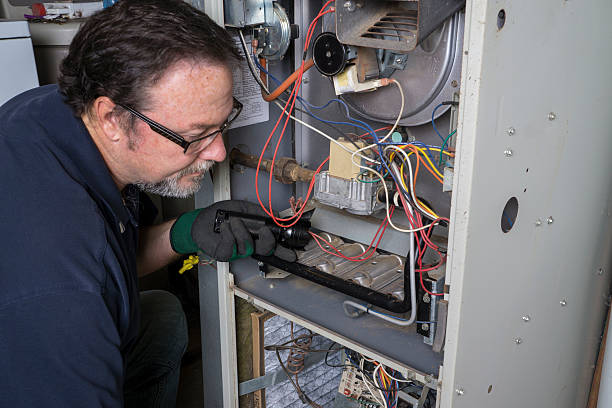
The Short Answer: Common signs a furnace needs to be replaced include being 15 years old or older, frequent repairs, rising heating bills, uneven heating, and strange recurring noises. If your furnace shows two or more of these signs, fall is a great time to plan a replacement before Central Oregon’s coldest weather arrives.
Central Oregon’s heating season can last six months or more. Our winters bring long stretches of freezing nights, and a broken furnace in January leaves you with a cold house while you wait for a new one. Spotting the warning signs now gives you time to compare options, use rebates, and schedule an installation on your timeline.
Some signs mean your furnace needs a repair, while others mean your money is better spent on a new furnace. Signals like yellow burner flames or a carbon monoxide alarm are safety issues that need a professional right away.
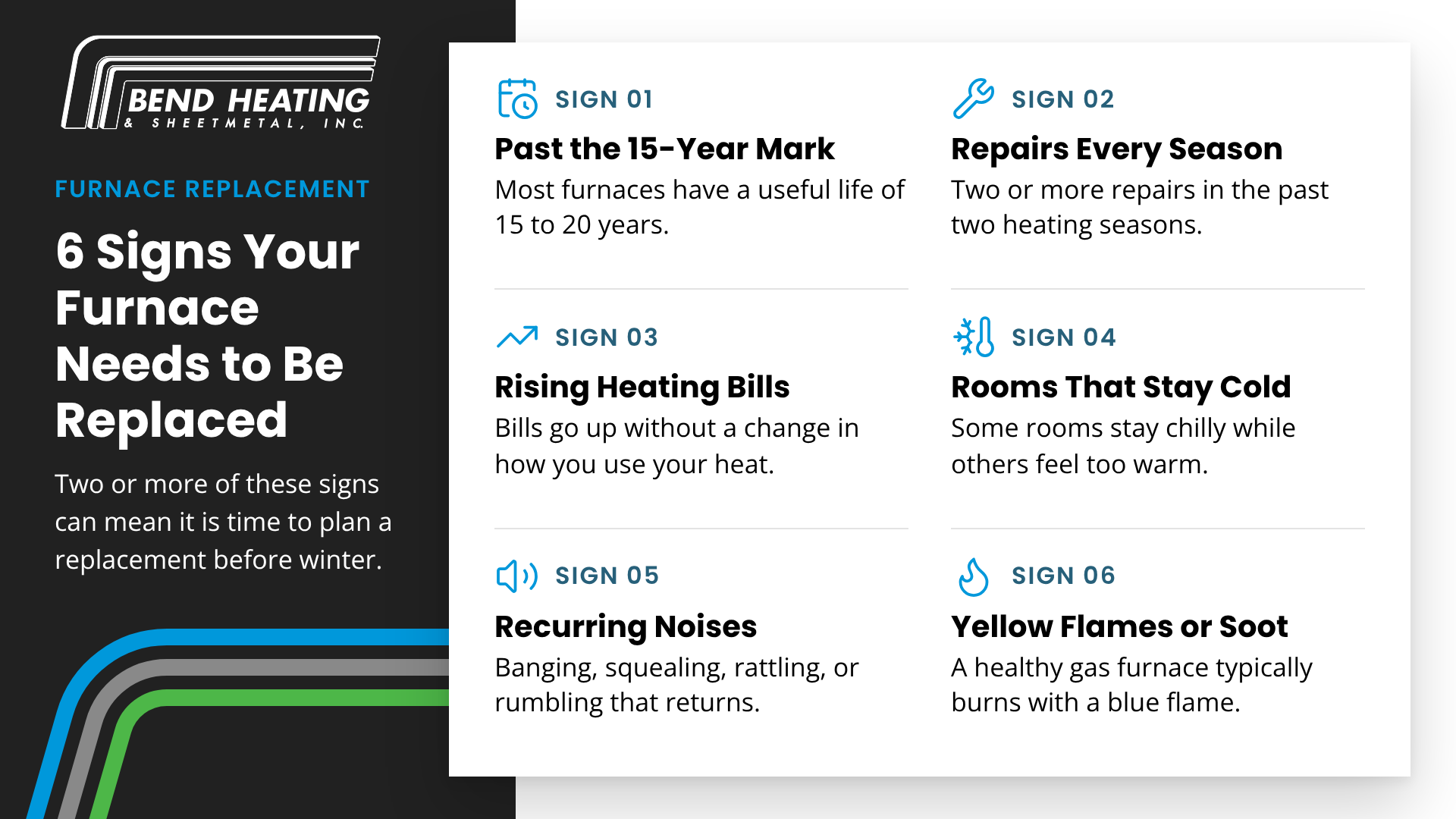
6 Signs Your Furnace Needs to Be Replaced
1. Your Furnace Is Past the 15-Year Mark
Most furnaces have a useful life of 15 to 20 years, and poor maintenance can shorten that. Once an aging furnace passes the 15-year mark, parts wear out faster and repairs get harder to justify. You can find the install date on the label inside the furnace door or in your home records.
Age alone does not mean you need a new furnace. An old furnace that heats evenly and passes its yearly safety check can keep running. Age combined with any other sign on this list is where you may need to start planning.
2. You’re Calling for Repairs Every Season
Frequent furnace repairs are one of the telltale signs a system is nearing the end of its life. If you have needed a furnace repair twice or more in the past two heating seasons, parts are likely failing one after another.
Our team uses a simple rule here. If a repair costs more than half the price of a new furnace, a replacement usually makes more financial sense. Constant repairs on an older furnace add up over time, so a new system is often the better investment in the long run.
3. Your Heating Bills Keep Going Up
If your energy bills rise without a change in how you use your heat, your furnace may be losing energy efficiency. An old furnace can burn more fuel to make the same amount of warm air, so your energy costs may climb each winter.
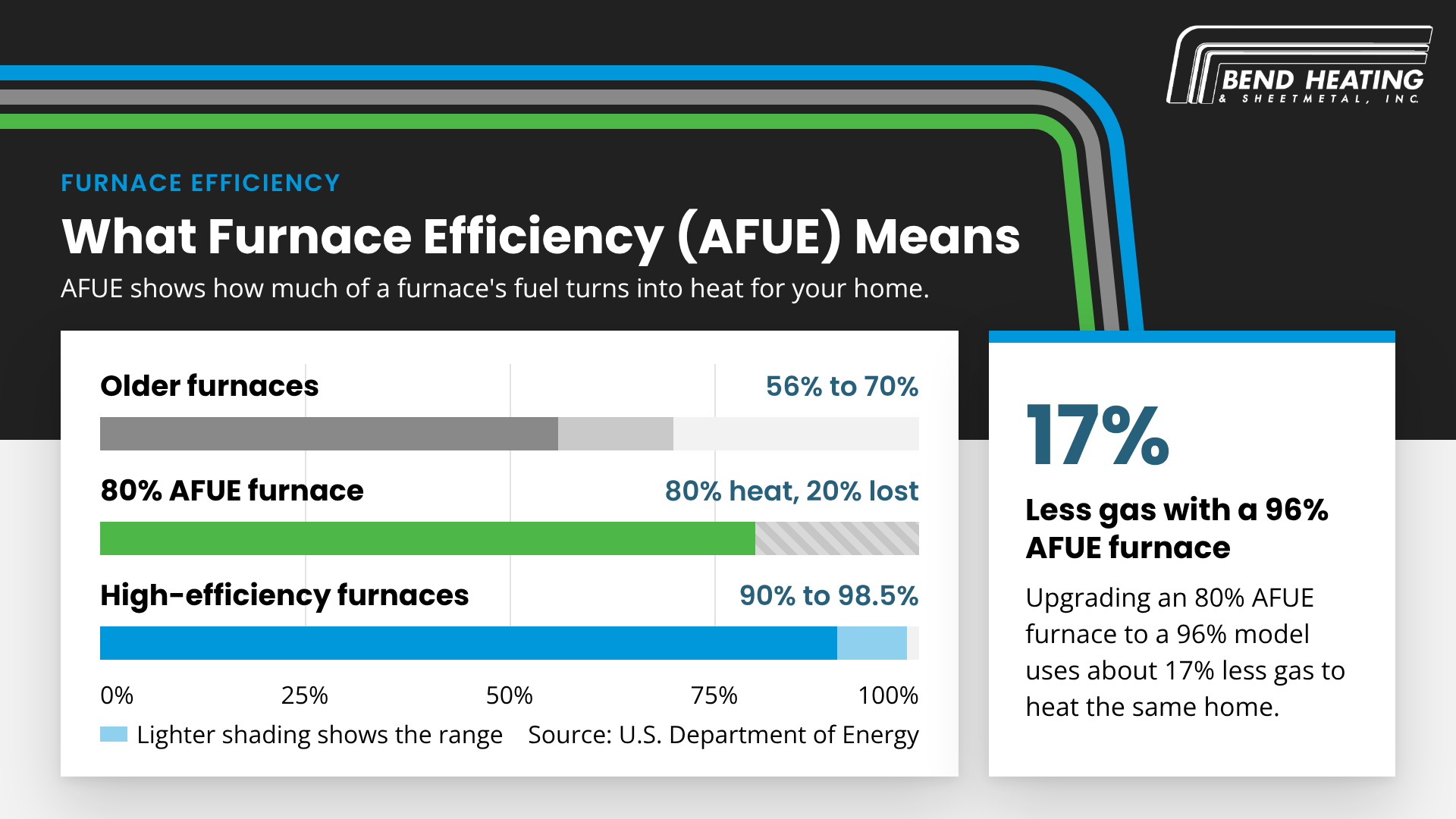
Efficiency is measured by annual fuel utilization efficiency (AFUE), which shows how much of a furnace’s fuel turns into heat for your home. A furnace rated 80% AFUE turns 80% of its fuel into heat, and the rest is lost. According to the U.S. Department of Energy, older furnaces run at 56% to 70% AFUE, while high-efficiency models reach 90% to 98.5%. Bend Heating & Sheet Metal installs high-efficiency gas furnaces that use less fuel, and some homeowners may qualify for Energy Trust of Oregon incentives.
4. Some Rooms Stay Cold
Uneven heating means some rooms stay chilly while others feel too warm. Check for a dirty furnace filter or duct problems first. If the filter is clean and the problem continues, the furnace may be losing capacity or may be the wrong size for your home.
When cold rooms show up along with other signs on this list, like rising heating bills or an older system, it can point to a bigger problem with your heating system. Contact us to have one of our NATE-certified technicians take a look. They can check your airflow, ductwork, and furnace size, then explain your options so you can decide what makes sense for your home.
5. Strange Noises That Keep Coming Back
A low hum and the whoosh of warm air are normal. Banging, squealing, rattling, or rumbling are not. These noises often point to a failing blower motor, loose parts, or delayed ignition.
A single noise that goes away after one repair usually isn’t a reason to replace your furnace. When strange noises keep coming back on an older furnace, it often means several parts are wearing out, and fixing them one at a time can turn into costly repairs.
6. Yellow Burner Flames or Soot
A healthy gas furnace typically burns with a blue flame. A yellow or flickering flame, or soot around the furnace, can mean fuel is not burning cleanly. Poor combustion can produce carbon monoxide, so this sign needs a professional inspection right away.
The cause can be dirty burners, which a tune-up can fix. On an older furnace, yellow flames can also point to worn parts or a cracked heat exchanger, and replacement is often the safer choice. Turn the furnace off and have a technician check it before you use it again.
Repair or Replace at a Glance
| Sign | Repair | Replace |
| Age | Under 10 years old | Past the 15-year mark |
| Repair history | First repair in years | Two or more repairs in two seasons |
| Repair cost | Less than half the cost of a new furnace | More than half the cost of a new furnace |
| Heating bills | Steady year to year | Rising each winter with no change in use |
| Strange noises | One noise fixed with one repair | Noises that keep coming back |
| What a technician finds | Dirty filter or loose part | Cracked heat exchanger |
Safety Concerns With an Older Furnace
Some furnace problems go beyond comfort or cost. With a gas furnace, two of the biggest safety concerns are a cracked heat exchanger and carbon monoxide leaks. An electric furnace does not burn fuel, so it does not create carbon monoxide.
Cracked Heat Exchanger
The heat exchanger keeps the gases from burning fuel separate from the air that blows through your home. After years of heating up and cooling down, the metal in an older furnace can crack and let those gases, including carbon monoxide, mix with the air your family breathes. You usually can’t see a crack yourself, which is one reason a yearly inspection matters. When an HVAC technician finds one, the furnace is typically shut off and tagged as unsafe, and replacement is usually the only safe option.
What to Do If Something Seems Wrong
A gas furnace problem can affect your family’s health, so act quickly and let a professional handle the repair. If you notice any of these warning signs, follow these steps:
- Your carbon monoxide detector goes off: Carbon monoxide has no color or smell. If your detector sounds or anyone has symptoms like headache, dizziness, or nausea, get everyone outside and call 911. The U.S. Consumer Product Safety Commission recommends an alarm on every level of your home and outside sleeping areas.
- You smell gas: A gas leak often smells like rotten eggs. Leave your home right away and call 911 from outside.
- Once everyone is safe: Call us for same-day emergency HVAC repair so a technician can find the cause.
Why Fall Is the Best Time to Replace Your Furnace
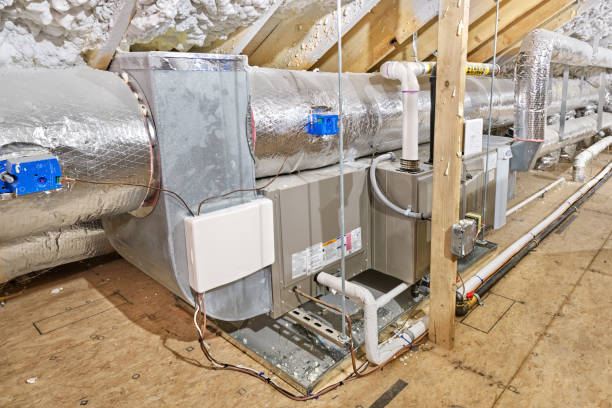
Waiting until your furnace fails means making a big decision in a hurry. Planning a replacement in the fall gives you a few advantages:
- More scheduling options: Heating calls jump after the first cold snap. Replacing before the winter months lets you pick the install date.
- Time to compare choices: You can weigh a high-efficiency gas furnace replacement or an electric air handler paired with a heat pump without a cold house rushing the decision.
- Rebates and financing: Some homeowners may qualify for Energy Trust of Oregon incentives on high-efficiency systems, and HVAC financing can spread payments over time.
- A safety check before heavy use: A fall furnace tune-up includes a professional inspection that catches problems before you have to rely on your heating system every day.
What to Look for in a New Furnace
A modern furnace tends to use less fuel and heat more evenly than an older system. Here is what to compare:
- AFUE rating: High-efficiency gas furnaces are rated 90% AFUE or higher. Upgrading an 80% AFUE furnace to a 96% model uses about 17% less gas to heat the same home.
- Proper sizing: A load calculation matches the furnace to your home’s size, insulation, and windows. A furnace that is too large or too small can waste energy and wear out sooner.
- Programmable thermostat: Adjusting the heat while you sleep or are away may help lower energy costs. A smart thermostat can also adjust for Central Oregon’s big temperature swings between day and night.
- Gas or electric: Many local homeowners replace an old gas furnace with an electric furnace paired with a heat pump. Bend Heating & Sheet Metal installs both types of furnaces.
Once your new furnace is in, regular maintenance keeps it running well. Our furnace maintenance plans include yearly service, and the Preferred plan adds priority same-day service and 10% off repairs.
Frequently Asked Questions
Is it worth repairing a 20-year-old furnace?
Usually not, unless the repair is small and the furnace is safe. At that age, that money is often better spent on a new, more efficient furnace.
How long does furnace replacement take?
Most standard furnace replacements take one day, including any electrical and ductwork modifications.
Stay Warm This Winter With Bend Heating & Sheet Metal
A furnace past the 15-year mark, frequent furnace repairs, climbing heating bills, uneven heating, and strange noises are common signs it is time for a new furnace. Any gas furnace safety issue, like a cracked heat exchanger, needs attention right away, so call a professional before you run the system again.
Bend Heating & Sheet Metal has helped Central Oregon families with their heating and cooling since 1953. Our NATE-certified team handles repairs and maintenance, and we give honest advice on when a repair still makes sense. When it is time to replace, we install high-efficiency furnaces as a Carrier Factory-Authorized Dealer, help you see if you qualify for Energy Trust of Oregon incentives, and offer flexible financing to help a replacement fit your budget.
We serve Bend, Redmond, Sisters, Sunriver, Prineville, and La Pine. Request a free quote or call (541) 382-1231 to schedule your furnace inspection before winter.
 CALL US
 TEXT US