
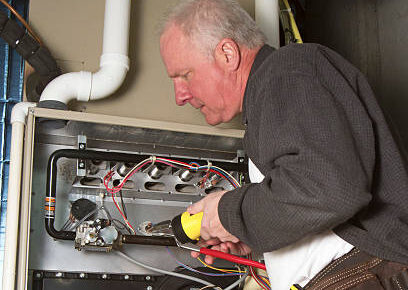
The Short Answer: Furnace short cycling happens when your furnace turns on and shuts off again before your home reaches the set temperature. Common causes include a dirty air filter, a thermostat problem, a dirty flame sensor, overheating, a blocked exhaust vent, or an oversized furnace. Some of these you can solve yourself, while others need a professional technician.
A furnace that keeps starting and stopping is a sign that something needs attention. Short cycles can put extra wear on parts like the blower motor and igniter, waste fuel, and leave some rooms colder than others. In Central Oregon’s cold weather, those small problems can turn into a broken furnace.
Some causes of short cycling are simple fixes you can handle at home, like changing a clogged air filter. Others, like a cracked heat exchanger or a blocked flue, are safety issues that need a trained technician right away.
What Is Furnace Short Cycling?
During a normal heating cycle, your thermostat calls for heat, the burners light, and the blower fan pushes warm air through your air vents until the room reaches the desired temperature. Then the furnace shuts off and rests until the temperature drops again.
A short cycling furnace stops partway through that process. Signs to watch for include:
- The furnace runs for only a few minutes, then shuts off and starts again soon after
- Your home never quite reaches the temperature on the thermostat
- Some rooms feel warm while others stay cold
- You hear the furnace click on and off more often than usual
- Your heating bills go up without a change in how you use your heat
Common Causes of a Short Cycling Furnace
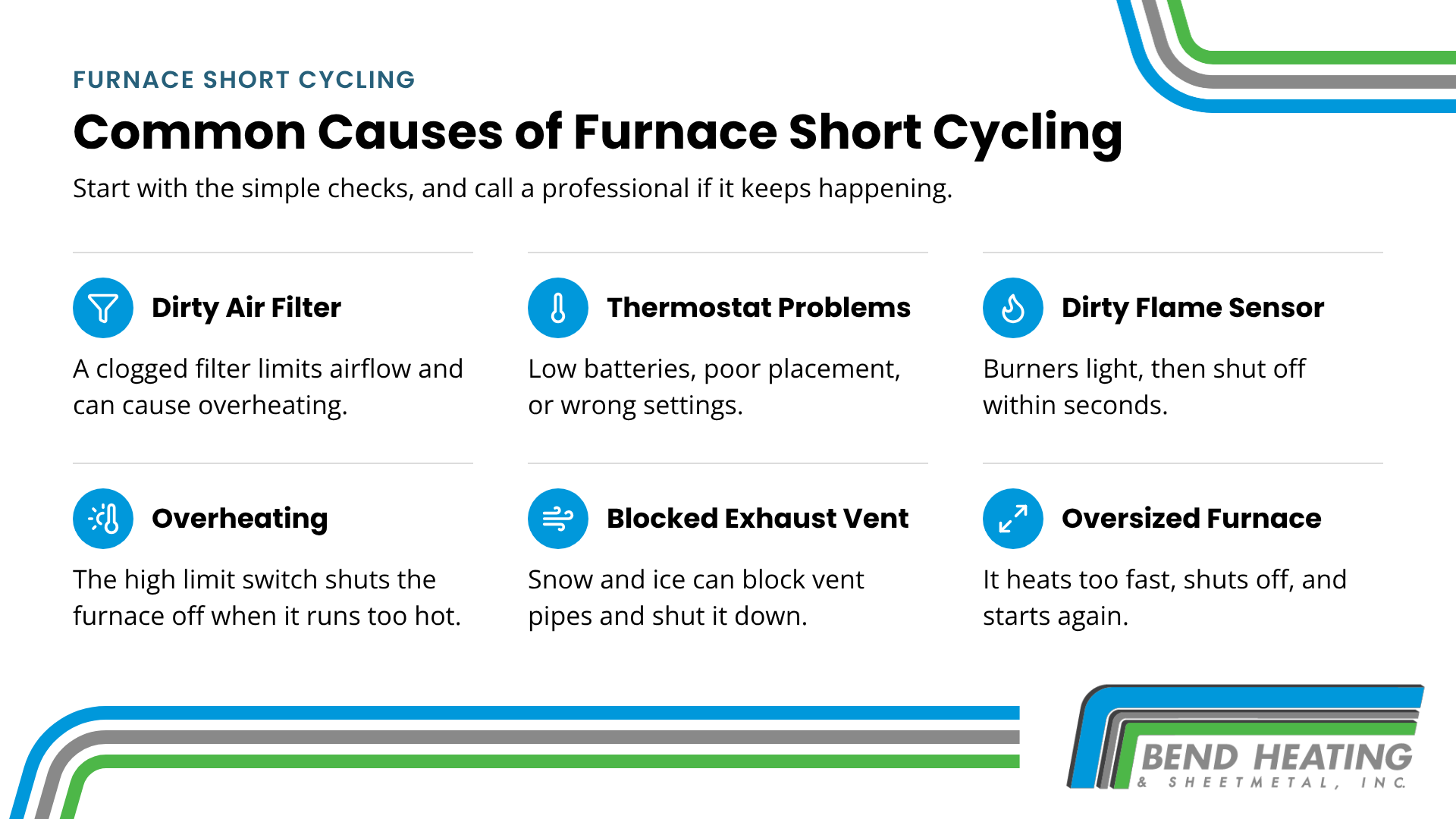
Dirty or Clogged Air Filter
A dirty filter is one of the most common causes of short cycling. A clogged air filter limits airflow, so heat builds up inside the furnace cabinet. A dirty air filter is one of the main reasons a furnace can overheat, which can trip a safety switch and shut the burners off early.
ENERGY STAR recommends inspecting your furnace filter monthly and notes that a dirty filter can raise energy costs and damage your equipment. As a general rule, a 1-inch filter should be replaced every one to three months, and a 4-inch filter every three to six months.
Thermostat Problems
The thermostat tells your furnace when to start and stop, so a malfunctioning thermostat can cause short cycling, no heat, or a furnace that runs constantly. Common thermostat issues include:
- Placement: A thermostat should be on an interior wall away from direct sunlight, drafts, doorways, and windows. Sunlight or a nearby heat source can make the thermostat think your home is warmer than it is.
- Low batteries: Weak batteries can cause the thermostat to act up. If the screen appears dim or blank, or shows a low battery warning, replace the batteries before you call for service.
- Settings or wiring: A newly installed smart thermostat with incorrect settings or faulty wiring can send mixed signals to the furnace.
Dirty Flame Sensor
The flame sensor confirms that the burners have lit. If it is coated in carbon buildup, it may not detect the flame, so the furnace shuts the gas off as a safety step. A dirty flame sensor often shows up as burners that light and then go out within seconds. After several failed tries, the furnace may go into lockout, a safety shutdown that keeps it from restarting until it resets or is repaired.
Overheating and the High Limit Switch
The high limit switch is a safety device that turns the furnace off when the internal temperature gets too high. Once the furnace cools, it starts again, and the cycle repeats. Overheating usually comes from airflow restrictions, such as:
- A dirty filter
- Closed or blocked air vents and return grilles
- A failing blower motor
- Ductwork problems that raise static pressure in the system
A limit switch that keeps tripping is a warning sign. Proper airflow needs to be restored before the furnace can run normally.
Blocked Flue or Exhaust Vent
Your gas furnace sends combustion gases out through a flue pipe or exhaust vent. When that path is blocked, the furnace’s safety controls may shut it down. In Central Oregon, snow and ice can block intake or exhaust pipes on the side of your home, and a blocked vent can cause dangerous carbon monoxide buildup inside. After a storm, check that the exhaust flue and intake pipes outside are clear.
Oversized Furnace
An oversized furnace heats the space near the thermostat too quickly, shuts off, and then starts again once that area cools. This kind of short cycling often starts right after installation. A properly sized furnace is chosen with a load calculation during an in-home assessment, which looks at your home’s size, insulation, and windows. An oversized system often needs to be replaced to fix the problem for good.
Cracked Heat Exchanger
The heat exchanger separates the flames in the combustion chamber from the air that blows through your home. Repeated overheating can lead to a cracked heat exchanger over time, especially on an older furnace. A crack can let carbon monoxide into your home, so when a technician finds one, the furnace is shut off and tagged as unsafe.
Why Short Cycling Is a Problem
Short cycling can lead to bigger issues if it is not fixed:
- More wear on parts: Frequent starts are hard on the igniter, blower motor, and other parts, which can wear them out and lead to more furnace repair calls.
- Higher energy bills: A furnace that starts and stops often may use more fuel to heat your home.
- Uneven heat: Short cycles may not run long enough to warm the whole house.
- Safety risks: Overheating can damage the heat exchanger over time, and a blocked flue can cause carbon monoxide buildup.
What to Do If Your Furnace Short Cycles
Some causes of short cycling are easy to check at home, while others need a trained technician. Start with the simple checks, and call a professional for the things you can’t fix yourself.
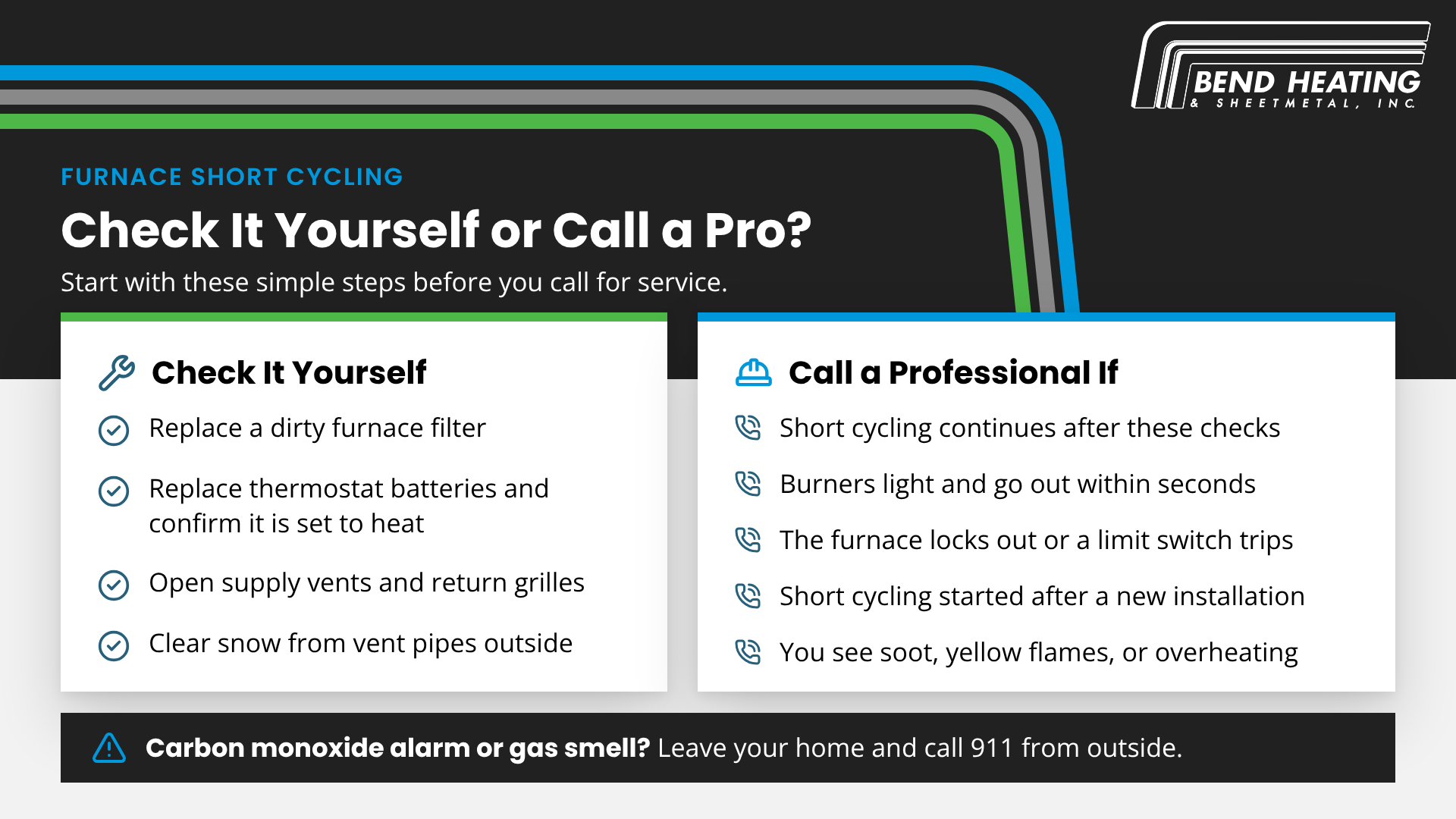
What You Can Check Yourself
Before you call for service, try these simple steps:
- Check the furnace filter. Replace it if it looks gray or dirty.
- Check the thermostat. Replace the batteries, confirm it is set to heat, and make sure it is not in direct sunlight or near a heat source.
- Open your air vents. Make sure supply vents and return grilles are open and not blocked by furniture or rugs.
- Look at the exhaust vent. After snow or wind, make sure the exhaust and intake pipes outside are clear.
If the furnace still short-cycles after these steps, the cause is likely inside the furnace.
When to Call a Professional
Call a professional technician if:
- Short cycling continues after you change the air filter and check the thermostat
- The burners light and go out within seconds
- The furnace locks out or a limit switch keeps tripping
- Your furnace started short cycling right after a new installation
- You see soot, yellow flames, or signs of overheating
Safety first: If your carbon monoxide alarm goes off or you smell gas, leave your home right away and call 911 from outside. Once everyone is safe, call for an emergency HVAC repair.
Regular maintenance can catch many causes of short cycling early, since a technician checks your furnace’s airflow and components for problems before they shut down your heat. Fixing small issues during a tune-up usually costs less than a bigger repair later.
Frequently Asked Questions
Is it safe to run a furnace that is short cycling?
It depends on the cause. A dirty filter is not an emergency, but running a furnace that keeps overheating can damage parts over time. If you notice signs of a blocked vent or a carbon monoxide alarm sounds, turn the furnace off and get help right away.
Can a smart thermostat cause short cycling?
It can if the settings or wiring are wrong, or if it is placed in a spot that gets direct sunlight. A smart thermostat that is set up correctly should not cause short cycling.
Furnace Short Cycling Repair From Bend Heating & Sheet Metal
Furnace short cycling means your furnace shuts off before your home reaches the desired temperature. Common causes include a dirty filter, thermostat problems, a dirty flame sensor, overheating, a blocked exhaust vent, and an oversized furnace. Start with the simple checks, but call a professional if the problem keeps coming back or you notice any safety warning signs.
Bend Heating & Sheet Metal has helped Central Oregon families keep their homes warm since 1953. Our NATE-certified team can find the cause of your short cycling, explain your options, and give honest advice on replacement if your furnace is near the end of its life. Our maintenance plans include yearly service that can help catch problems with your heating system before the coldest months arrive.
We serve Bend, Redmond, Sisters, Sunriver, Prineville, and La Pine. Request a free quote or call (541) 382-1231 to get started.
 CALL US
 TEXT US